
The Gymtimidation Crisis
The modern gym environment presents a striking paradox; while thousands share the same physical floor, they remain isolated by a pervasive 'headphones-on' culture and a high-stakes social hierarchy. For many, this environment triggers what we call 'Gymtimidation'—a form of performance anxiety that acts as a primary barrier to entry. When users feel socially isolated and technically inadequate, the result is immediate abandonment of their fitness goals.
Bridging the Gymtimidation Gap
Pullup was designed to dismantle these psychological barriers by transforming the gym into an inclusive, community-driven environment. By replacing individual isolation with judgement-free accountability, the platform facilitates intentional, low-pressure connections that bridge the gap between 'first-day' anxiety and long-term retention.
Project Overview
Despite the growth of the wellness industry, the physical gym remains a socially fragmented space. According to the IHRSA, nearly 50% of adults experience significant anxiety when visiting a gym alone—a phenomenon known as 'Gymtimidation' that leads to high drop-off rates and lack of motivation.
Strategic Vision
My goal was to design a solution where belonging acts as a core utility. By facilitating intentional, low-pressure connections, Pullup replaces individual isolation with Accountability Frameworks. This ensures that users—especially beginners—feel empowered to achieve their fitness goals through a sense of communal support rather than performance-based pressure.
As the Lead UX/UI Designer & Researcher, I owned the end-to-end product lifecycle within a cross-functional environment. My focus was on translating complex social anxieties into intuitive digital touchpoints.
Secondary Research
To validate our hypothesis, I conducted a deep dive into the psychological barriers of the fitness industry. By synthesizing credible industry reports in the health and wellness space, I identified that the primary obstacle to gym retention isn't a lack of equipment—it is the social tax of navigating the environment alone.
Retention Engine
80% of gym members who exercise with others stay for at least 12 months.
(IHRSA Retention Report)
Gym Buddy Effect
95% of those starting weight loss programs with friends complete them.
(J. of Consulting & Clinical Psych)
Digital Preference
82% of Gen Z and Millennials prefer socially-integrated fitness apps. (Les Mills Gen Z Fitness Report)
Primary Research
To go beyond industry statistics, I conducted a series of targeted in-person and remote interviews with a diverse group of gym-goers—ranging from fitness novices to seasoned athletes. By observing both verbal feedback and non-verbal cues, I sought to uncover the unspoken anxieties that prevent gym discipline and motivation.
The common theme across all interviews was not a lack of physical ability, but a deficit of social safety. These three core themes emerged as the primary drivers of user churn:
Gym Overstimulation
Fear of judgment rooted in the feeling of not knowing what to do at the gym or feeling of having to be in shape to enter the gym leads to an over-analysis of one's own movements and a constant feeling of being out of place.
Bad Gym Vibes
Feelings of excessive competitiveness and lack of respect for personal space are major deterrents for those going to the gym, which explains the prioritization of comfort over fitness goals.
Body Image Blues
Sense of dissatisfaction fueled by comparing oneself to unrealistic fitness standards creates a mental block that makes the act of exercising feel like a performance rather than a personal health journey.
User Persona

Andrea Weston, 36
Elementary School Teacher & Caregiver
“I want to be consistent, but the moment I walk through those doors, I feel like a guest in a space I don't belong in. It’s easier to stay on the treadmill where it’s safe than to ask for help."
Pain Points
Feeling watched, judged, or inferior to other seasoned athletes due to their physiques.
Difficulty asking for assistance due to social anxiety.
Unsure how to properly use equipment and gym space.
Lack of community despite being surrounded by people.
Goals
Find a workout partner to confide in to lower the stakes of entering the gym during peak hours.
Learn how to use equipment in order to follow workout routines without feeling embarrassment.
Build communal accountability with like-minded gym goers.
Behaviours
Exclusively sticks to cardio equipment due to its self-sufficient nature.
Uses phone excessively as a social barrier to avoid eye contact or potential judgement from others.
Checks gym occupancy apps prior to going and skips sessions if the gym appears too busy or intimidating.
User Task Flows
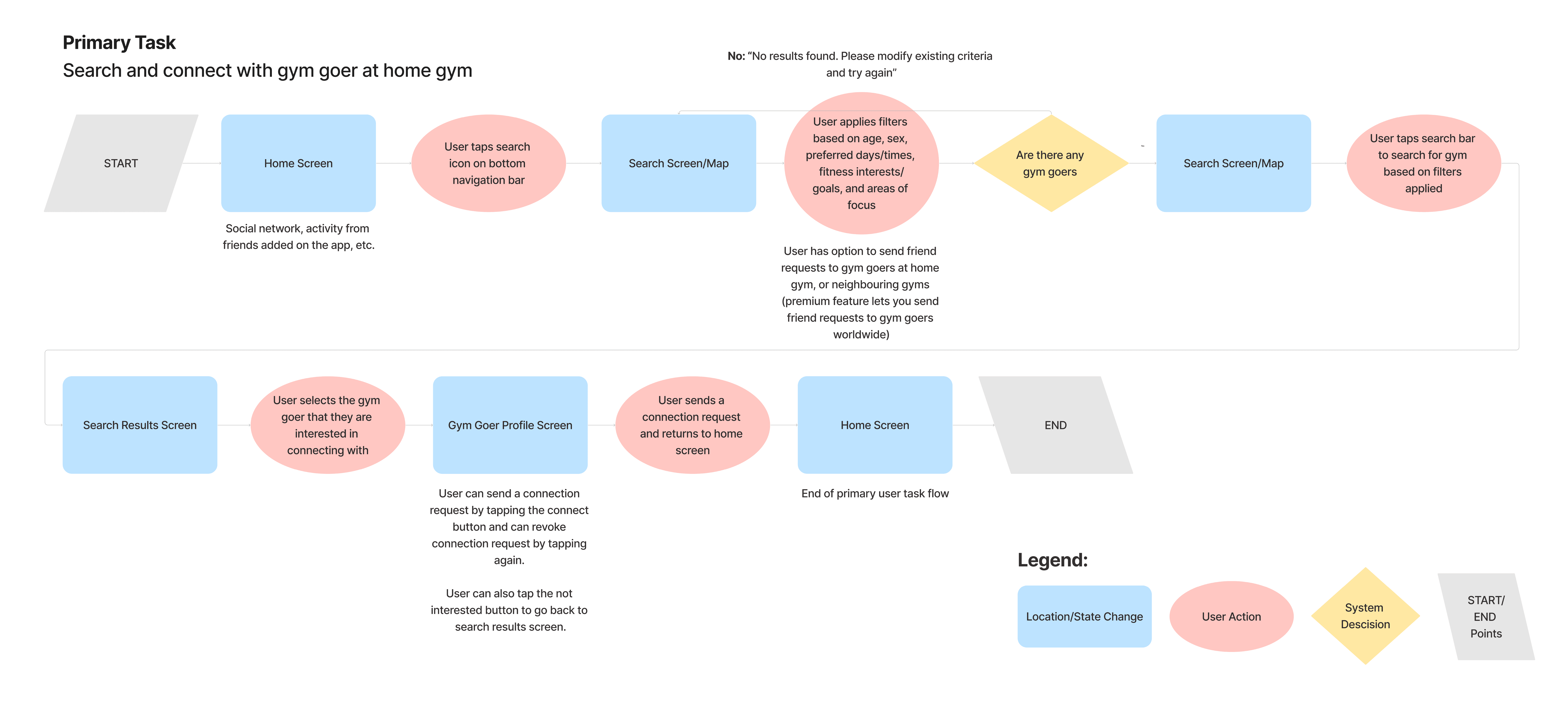
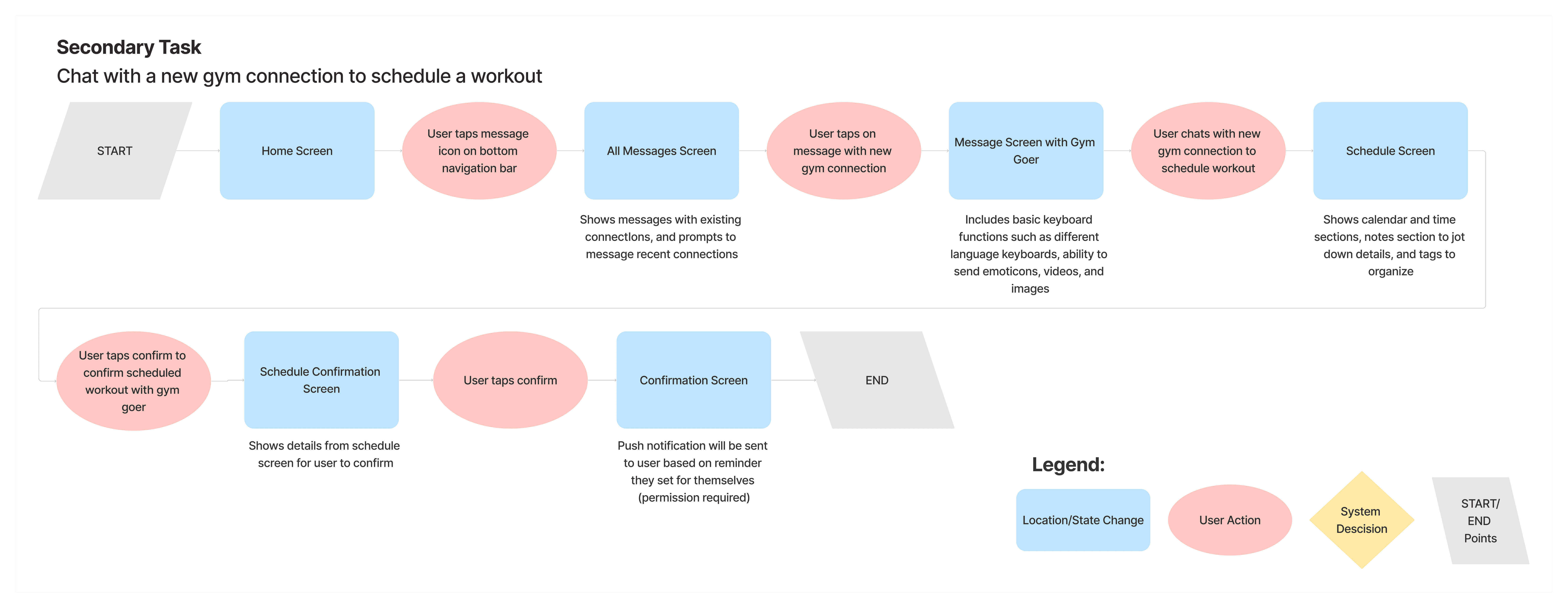
To solve the social friction identified in our research, I mapped out the logical paths a user takes to move from workout isolation to a scheduled workout with a gym partner. These flows prioritize clarity and safety, ensuring that every interaction feels intentional.
The primary flow focuses on the initial introduction to the world of social fitness. We streamlined the search and filter process to allow users like Andrea to find compatible gym partners based on specific criteria (location, fitness goals, and availability). By visualizing this path, we ensured that the transition from search to request sent is linear and reduces the cognitive load on the user.
Once a connection is established, the next logical step is moving from a digital match to a physical meeting. I architected a flow for an integrated messaging and scheduling system, allowing users to coordinate workout details and sync them to a built-in calendar.
Note on MVP Scope: For the current phase of this project, the prototype focuses exclusively on the Primary Discovery Flow. The scheduling and messaging architecture has been mapped out logically but will be fully developed and prototyped in a future iteration to further validate the end-to-end user experience.
Sketching the Experience
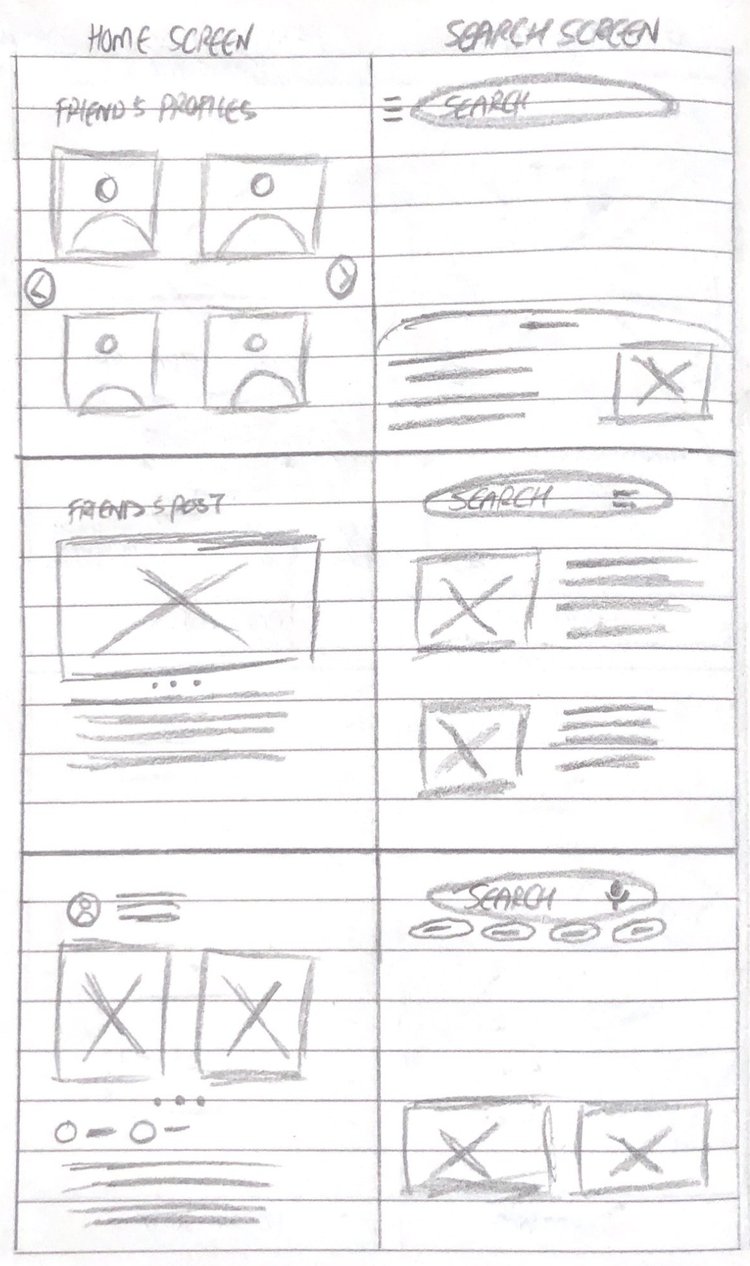
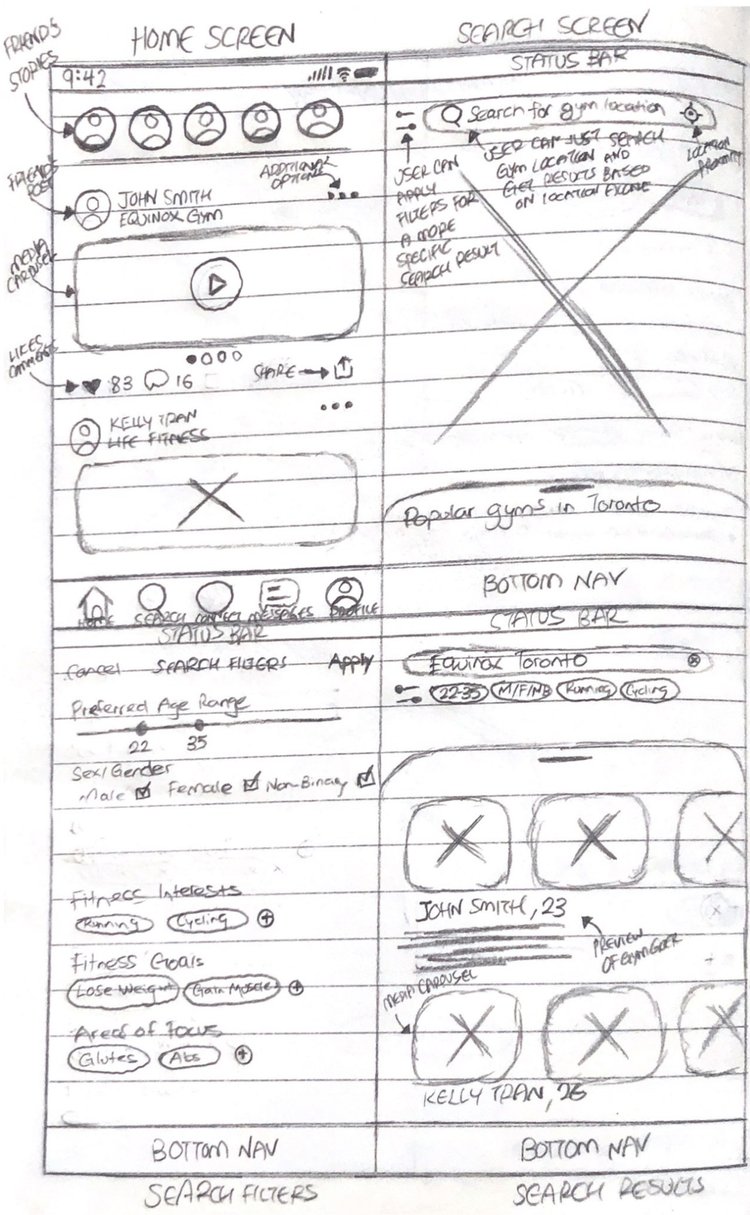
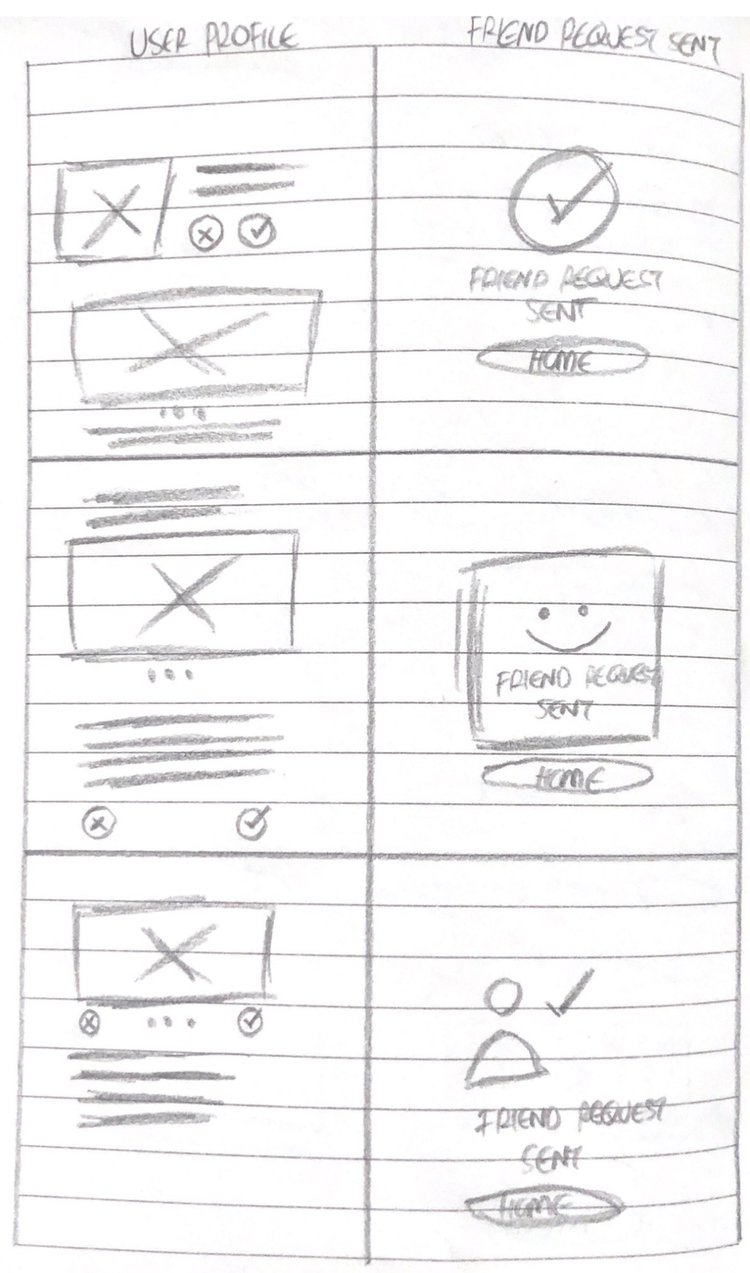
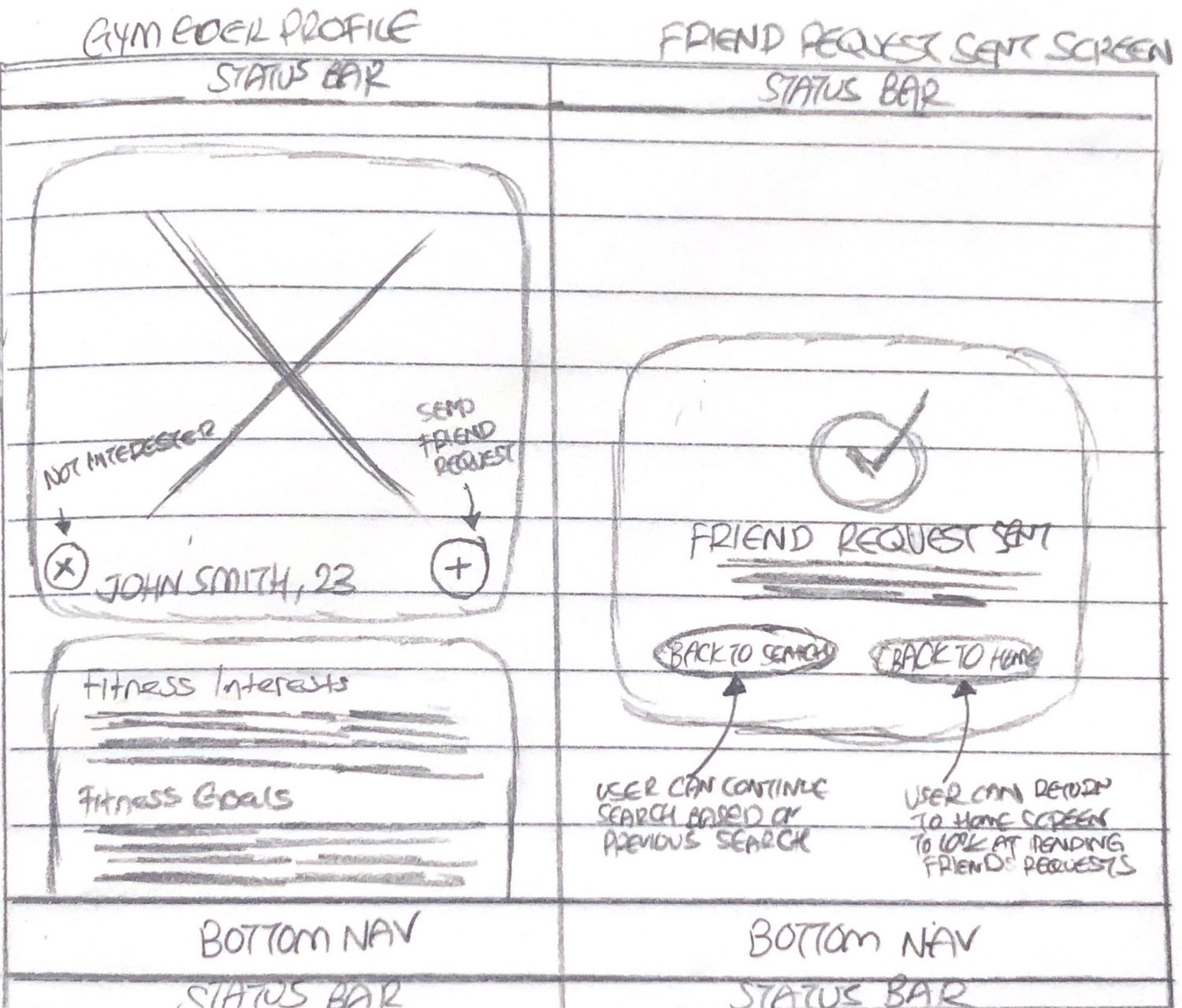
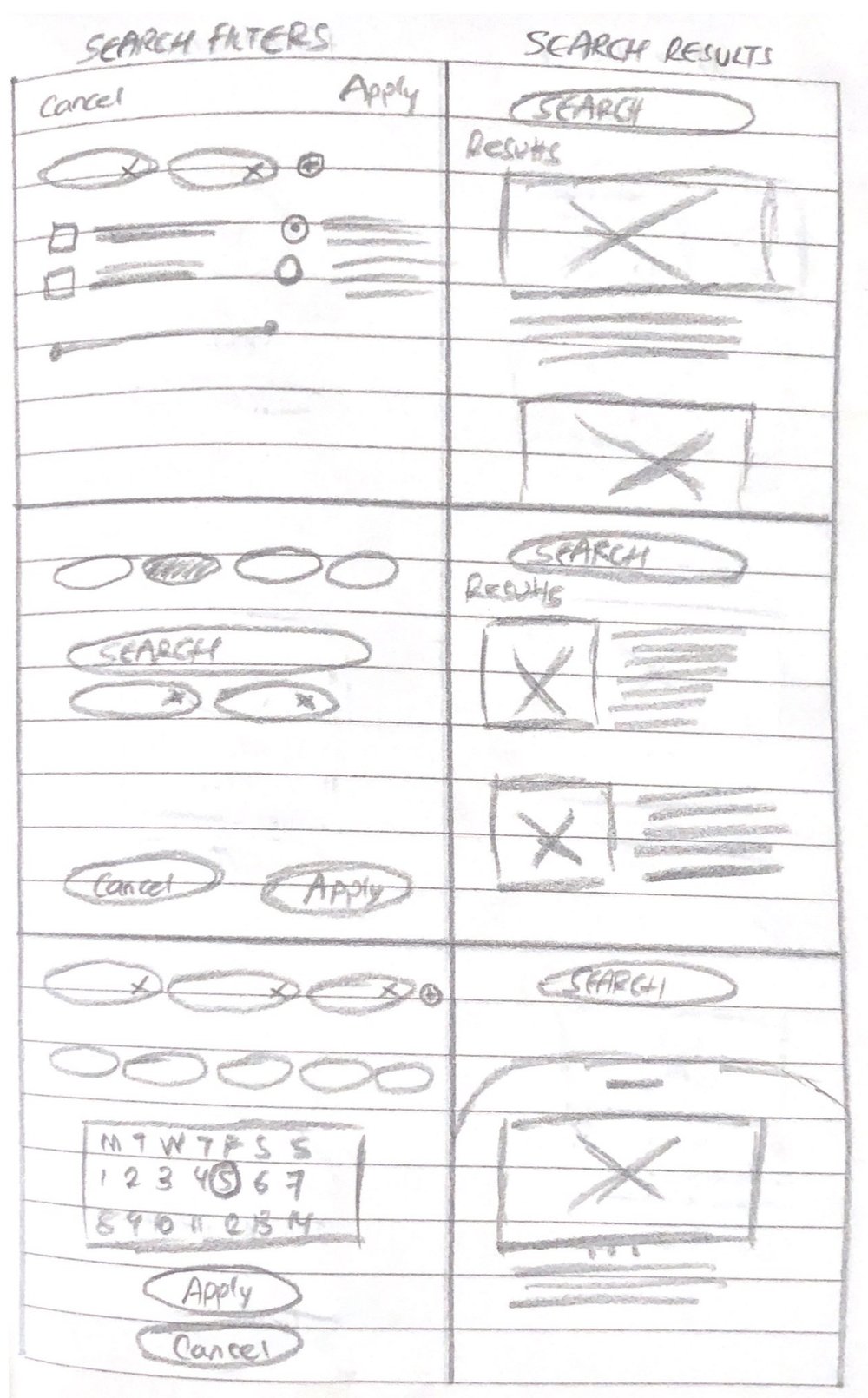
In the sketching phase, I prioritized low-fidelity validation to pressure-test the app's logical foundation before committing to high-fidelity design. By working on paper, I was able to rapidly explore multiple layout solutions, focusing purely on Information Architecture and navigational hierarchy. This allowed me to identify and eliminate potential friction points in the user journey early on, ensuring that the transition from a digital match to a physical meeting remained seamless and intuitive.
This intentional focus on the foundations over the aesthetics ensured that every interactive element was built to highlight the UX principle of Recognition over Recall. By prioritizing literal text labels and high-visibility touch targets, I established a system designed specifically to lower the social anxiety of our target audience. This phase proved critical in refining the initial discovery flow, establishing a validated framework that balances user safety with efficient community discovery.
Wireframing
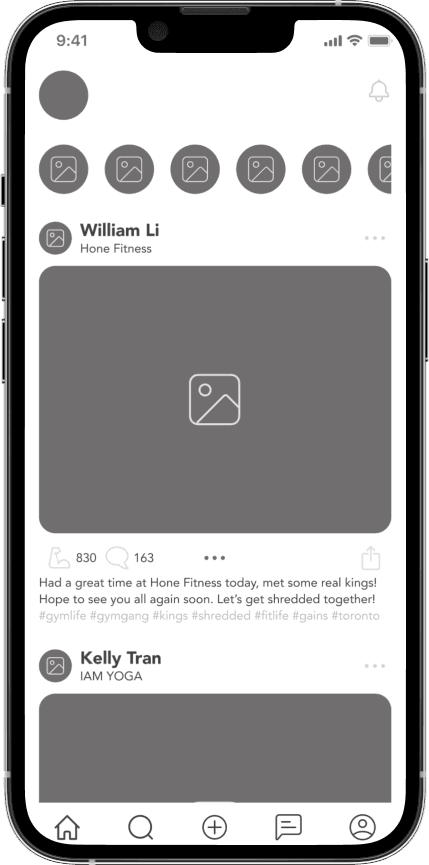
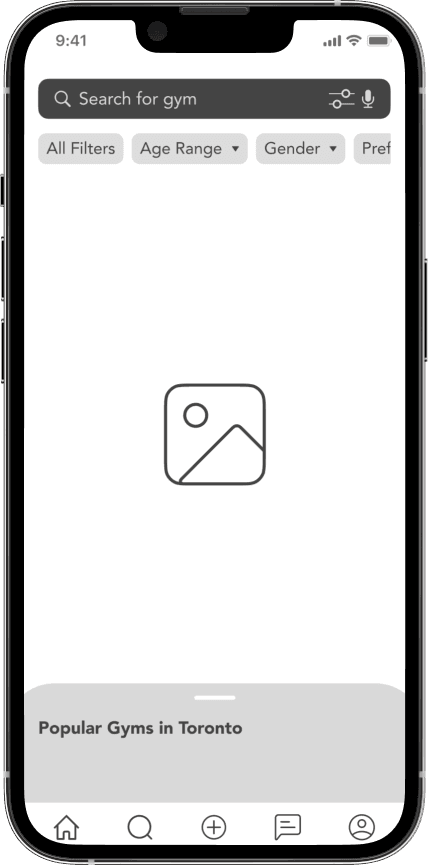
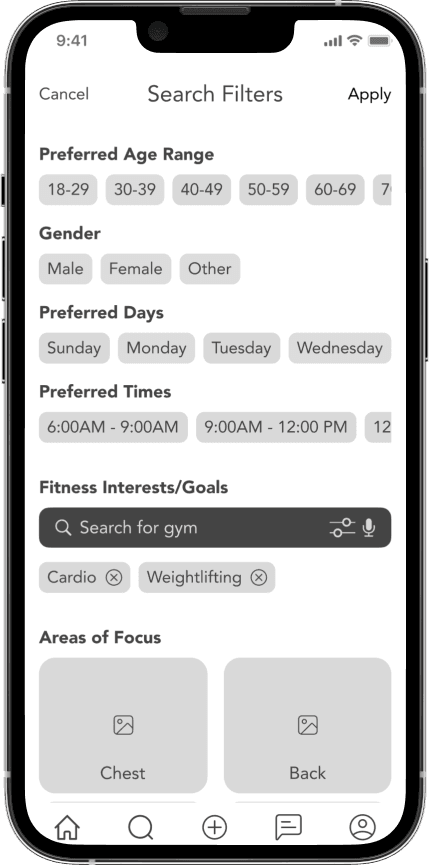
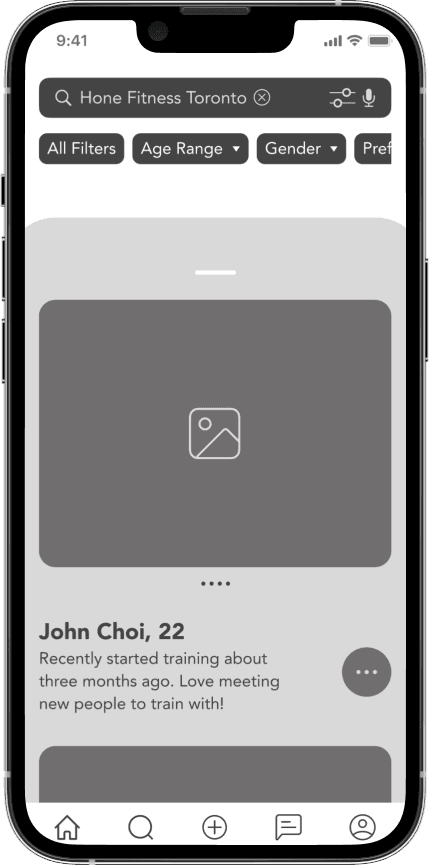
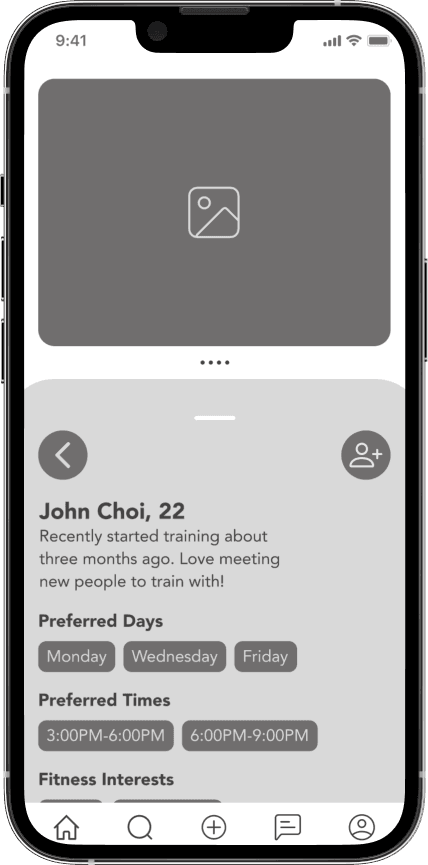
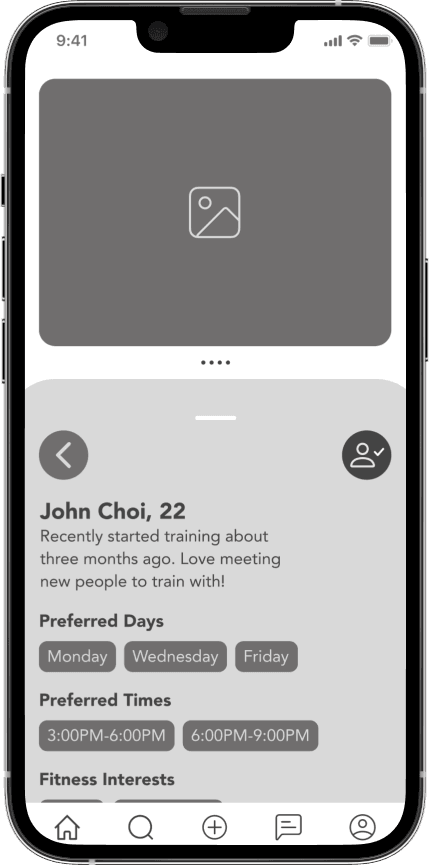
With the logic validated through sketching, I transitioned into digital wireframing to establish the core Information Architecture of Pullup. This phase was focused on creating an intuitive, low-friction interface that allows users to navigate social discovery without the sensory overload often found in traditional social platforms.
I focused on balancing ergonomic efficiency with social safety. By leveraging the "Familiarity Principle" through a standard bottom-navigation bar, I ensured that core utilities—Search, Messaging, and Profile—remain within a primary touch zone for seamless one-handed use.
To address the user’s need for practical compatibility, I implemented a filter-first search logic that allows for discovery based on shared fitness goals and specific "Areas of Focus" rather than mere proximity.
This structure is reinforced by a clear component hierarchy that prioritizes social validation and visual progress, utilizing large interaction points and a balanced copy-to-visual ratio to maintain accessibility in a high-activity gym environment.
Usability Testing Plan
The purpose of developing the usability testing plan is to evaluate how effective a digital solution could alleviate the social friction and "gymtimidation" that often prevent users from building meaningful fitness connections.
By conducting two rounds of testing with ten diverse participants, the study aimed to determine the feasibility of the app's discovery logic and identify any barriers to entry for users who find traditional in-person interactions daunting.
The methodology focused on high-intensity qualitative feedback gathered through 13 specific tasks, such as configuring complex search filters and navigating individualized profiles. These tests were crucial in identifying a contextual bias where initial design assumptions did not always align with actual user behaviour.
You can view the full usability testing plan here.
Design Prioritization Matrix
Following two rounds of usability testing, I was presented with a wide array of user feedback and potential feature enhancements. To ensure the most impactful improvements were prioritized for the next phase of the MVP, I utilized a 2x2 Design Prioritization Matrix. This allowed me to categorize insights based on User Value versus Implementation Effort.
This framework allowed for the immediate prioritization of key iterations such as reconfiguring the ergonomics of the like and comment buttons for right-handed users, while identifying high-effort strategic goals like adding location prompts for future development.
Conversely, aesthetic changes with low impact were moved to a lower priority, and high-effort requests that risked scope creep—such as fundamentally altering the navigation logic for "Not Interested" buttons—were intentionally de-prioritized to maintain a focused MVP.
You can view the full design prioritization matrix here.
Visual Accessibility
To transition from wireframes to a high-fidelity interface, I developed a design system rooted in legibility and emotional safety. Given that our target users experience gym-based anxiety, the visual language needed to feel professional and grounding rather than aggressive or over-stimulating.
Typography
I selected Avenir as the primary typeface for its exceptional readability on mobile interfaces. Originally designed for computer screens, Avenir features a tall x-height and distinct letterforms, which are critical for users navigating the app in high-activity environments where quick recognition is vital. By utilizing a range of variable weights, I established a clear typographic hierarchy that allows for rapid scanning of profiles and data points, effectively reducing cognitive load and adhering to established accessibility standards for diverse visual abilities.
Colour Palette
I engineered a colour palette that met WCAG 2.1 Level AA standards, ensuring that the visual elements were accessible to users with varying degrees of visual impairment. Utilizing a deep charcoal foundation provides a stable, low-glare environment that is particularly effective under harsh gym lighting, while high-contrast white elements and actionable accents guide the user’s eye toward primary interactions. This high-contrast utility ensures that the interface remains functional and grounding, supporting the emotional safety of our target audience by maintaining clarity across diverse real-world lighting conditions.
High-Fidelity Prototype
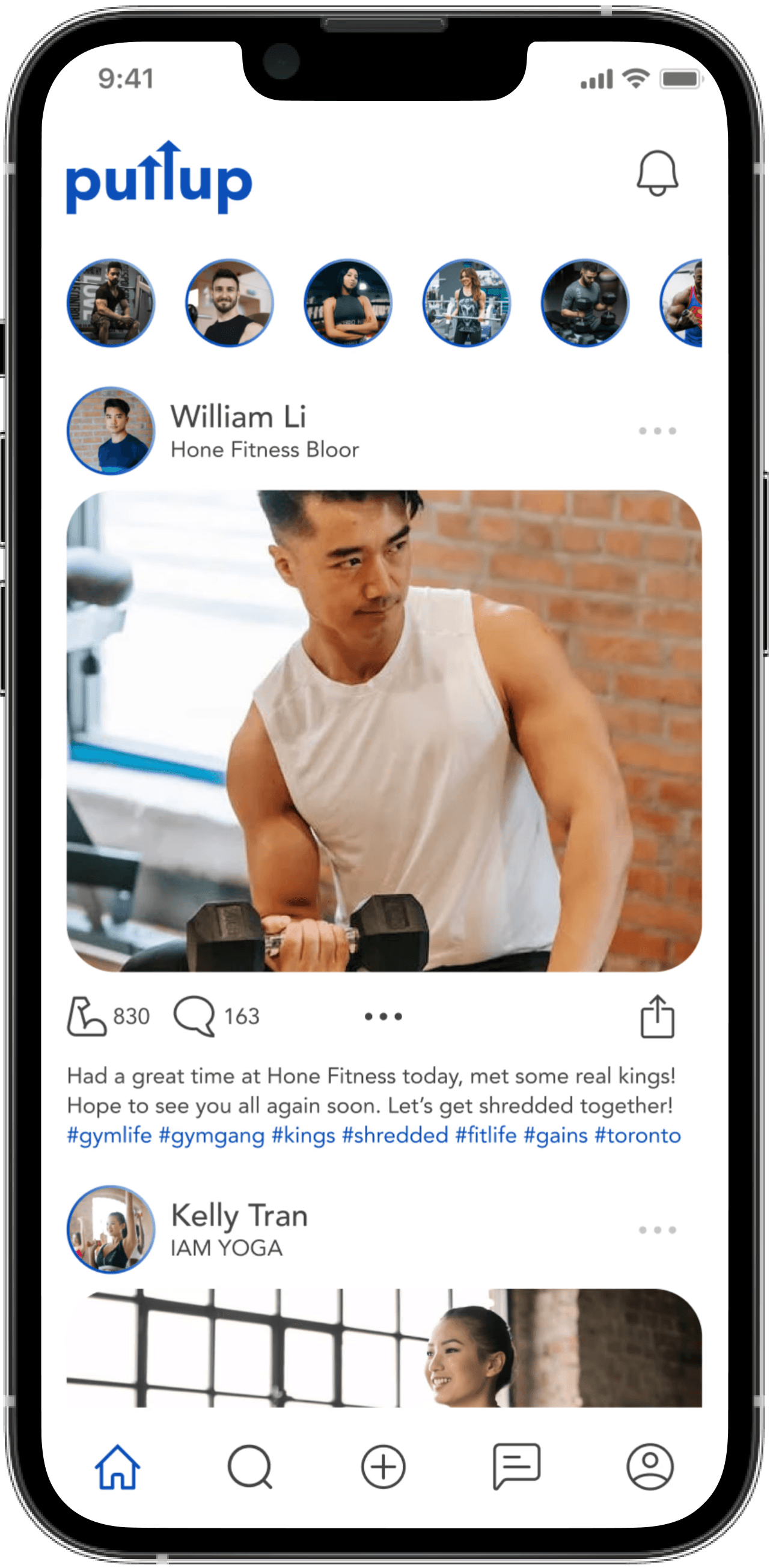
The final high-fidelity prototype represents a holistic solution that bridges the gap between digital interaction and physical community. By integrating the strategic insights from our primary research and iterative usability testing, the app successfully dismantles the psychological barriers of "Gymtimidation."
Moving beyond a mere "social media platform" tool, the final product serves as a blueprint for Social Safety as a Utility. It addresses the specific emotional needs of users who struggle to find community and inclusion at the gym by providing clear social validation touchpoints that reduce the friction of first-time interactions.
This project demonstrates a commitment to a user-centric design process, where evidence-based decisions and a focus on accessibility lead to a mature, market-ready MVP. The result is a platform that doesn't just help people find a workout partner, but actively fosters the long-term accountability and belonging required for sustainable health and wellness.

Reflections, Takeaways, and Future Planning
This project served as a deep dive into the intersection of behavioral psychology and social design. It reinforced my belief that great UX isn't just about solving a functional problem; it’s about understanding the emotional state of the user before they even open the app.
The Power of Validation
Usability testing was the most humbling and productive phase of this project. It reminded me that as designers, we must remain detached from our first drafts to allow real user behaviour to dictate the final product.
Designing for Social Safety
I learned that in social apps, privacy and security aren't just features—they are the foundation of user trust. Every design decision must prioritize making the user feel safe enough to be vulnerable.
Scaling the Impact
Moving forward, the next iteration of Pullup will focus on the Coordination Phase. I plan to develop the integrated scheduling system and "Smart-Match" algorithms to further reduce the friction of moving from a digital connection to an in-person workout. Additionally, I aim to explore "Verified Gym" partnerships to create a truly seamless, authenticated community experience.